U.S. soul singer Bobby Womack says he has signs of dementia


(Reuters) – U.S. singer-songwriter Bobby Womack said he is beginning to show early symptoms of Alzheimer’s disease, including trouble remembering names and song lyrics.


“The doctor said, ‘You have signs of Alzheimer’s,’” Womack, 68, told Britain’s BBC Radio 6 music station over the weekend. “He said it’s not bad yet but it’s going to get worse.”


He added: “How can I not remember songs that I wrote? That’s frustrating.”


The 2009 Rock and Roll Hall of Fame inductee, whose hits include “Woman’s Gotta Have It” and “If You Think You’re Lonely Now,” suffered a number of health problems in the past year.


In March it was disclosed that he was diagnosed with colon cancer, which was later successfully treated, and he also underwent what was termed a “minor heart procedure.”


Other recent health issues included prostate cancer, pneumonia and collapsed lungs.


The soul veteran in October won the best album award from the British magazine Q for his 2012 release, “The Bravest Man in the Universe,” beating out much younger competition.


Womack got his start in the music business as the lead singer in the soul group The Valentinos, which he formed with his brothers, and played guitar for Sam Cooke.


He also wrote The Rolling Stones’ first chart topper in the UK, 1964′s “It’s All Over Now.”


(Reporting by Eric Kelsey, editing by Jill Serjeant and Cynthia Osterman)


Music News Headlines – Yahoo! News


Title Post: U.S. soul singer Bobby Womack says he has signs of dementia
Url Post: http://www.news.fluser.com/u-s-soul-singer-bobby-womack-says-he-has-signs-of-dementia/
Link To Post : U.S. soul singer Bobby Womack says he has signs of dementia
Rating:
100%

based on 99998 ratings.
5 user reviews.
Author: Fluser SeoLink
Thanks for visiting the blog, If any criticism and suggestions please leave a comment


Read More..

Judge rejects part of Apple App Store suit vs Amazon


SAN FRANCISCO (Reuters) – A U.S. judge on Wednesday rejected part of Apple Inc‘s lawsuit against Amazon.com Inc‘s use of the term App Store, ruling Apple cannot bring a false advertising claim against the online retailer.


U.S. District Judge Phyllis Hamilton in Oakland, California, granted Amazon‘s motion for partial summary judgment, which only challenged Apple’s false advertising allegations. Apple leveled other claims against Amazon, including trademark infringement.


An Apple spokeswoman declined to comment, and an Amazon representative could not be reached immediately.


Amazon has stepped up competition against Apple in recent years, launching its cheaper Kindle tablet computer to go after the dominant iPad and trying to lure mobile application developers to its Kindle platform.


One of the first public clashes in their tussle was Apple’s 2011 lawsuit.


Apple accused Amazon of misusing what it calls its APP STORE to solicit developers for a mobile software download service. However, Amazon said its so-called Appstore has become so generic that its use could not constitute false advertising.


In a legal filing last year, Amazon added that even Apple Chief Executive Tim Cook and his predecessor, Steve Jobs, used the term to discuss rivals. Cook commented on “the number of app stores out there” and Jobs referred to the “four app stores on Android.”


In her ruling on Wednesday, Hamilton wrote that the mere use of “Appstore” by Amazon cannot be taken as a representation that its service is the same as Apple’s.


“Apple has failed to establish that Amazon made any false statement (express or implied) of fact that actually deceived or had the tendency to deceive a substantial segment of its audience,” Hamilton wrote.


A trial on Apple’s remaining claims is scheduled for August.


The case is Apple Inc v. Amazon.com Inc et al, U.S. District Court, Northern District of California, No. 11-01327.


(Additional reporting by Alistair Barr in San Francisco; Editing by Tim Dobbyn and Jeffrey Benkoe)


Internet News Headlines – Yahoo! News


Title Post: Judge rejects part of Apple App Store suit vs Amazon
Url Post: http://www.news.fluser.com/judge-rejects-part-of-apple-app-store-suit-vs-amazon/
Link To Post : Judge rejects part of Apple App Store suit vs Amazon
Rating:
100%

based on 99998 ratings.
5 user reviews.
Author: Fluser SeoLink
Thanks for visiting the blog, If any criticism and suggestions please leave a comment


Read More..

Generic color switch tied to not taking pills


NEW YORK (Reuters Health) – People seem less likely to take their medications if the pill color changes between prescriptions, which can happen when switching from a brand-name to generic drug, says a new study.


“I have a lot of experience when patients of mine come and say, ‘I was taking a green pill and now it’s pink. What’s going on?’” said Dr. Aaron Kesselheim, the study’s lead author from Brigham and Women’s Hospital and Harvard Medical School in Boston.


That confusion may lead to patients being unsure about their medications and end with them not taking the drugs, write the researchers in JAMA Internal Medicine, formerly known as the Archives of Internal Medicine.


The researchers used a national database of medical claims from the early 2000s to compare people who got their seizure drugs refilled on time to those who did not.


Overall, they had information on about 61,000 people who were taking one of eight drugs, which were offered in 37 colors and four shapes.


The researchers found that changes in pill color between prescriptions rarely occurred, but there was a difference between those who filled their orders and those who did not.


Of the approximately 11,500 people who did not fill their prescriptions, 1.2 percent had their drugs change color. That compared to 0.97 percent of people who got their prescriptions filled on time.


Kesselheim admitted the raw numbers are “pretty small,” but he said they can add up.


“Patients fill medications multiple times a year… The chance of these changes happening gets to be much higher,” he said, adding that even a small gap between prescriptions can spell trouble for seizure patients.


As for the shape of the pill changing between prescriptions, that was an even more rare event and did not seem to be linked to people skipping medicine.


Also, the researchers can’t prove a change in a pill’s color stopped someone from filling their prescription or if it was something else, such as a doctor discontinuing the drug.


‘SENSELESS AND ABSURD’


“If they are taking nine medicines, they get at least 36 ‘opportunities’ a year to experience a color change. This seemingly small risk then starts to appear very substantial,” wrote Dr. Kenneth Covinsky, associate editor of JAMA Internal Medicine, in a note accompanying the study.


Covinsky adds that it’s “absolutely senseless and absurd” to expose patients to that risk. “Equivalent generic medicines should be required to look like their brand-name counterparts,” he writes.


Currently, the U.S. allows cheaper generic drugs to be sold to patients after a brand-name counterpart’s market exclusivity ends. The U.S. Food and Drug Administration (FDA) says those generics must be essentially as effective as the brand-name drugs, but may be different colors, shapes and sizes.


One reason for the same drug having different appearances is that brand-name manufacturers may claim legal ownership of their drugs’ physical appearances.


“A patient taking five medicines, each produced by five generic manufacturers, theoretically faces over 3,000 possible arrays of pill appearances for what are, chemically and clinically speaking, the same drugs,” write the study’s authors.


In a statement to Reuters Health, the Generic Pharmaceutical Association, which represents generic drug manufacturers and distributors, said they are committed to working with the FDA to ensure their products meet all quality standards and are safe, effective and accessible to all patients who need them.


“We manufacture our products and receive approval from the FDA based on consistency with the regulations and standards established by the FDA,” said the statement.


In an accompanying editorial, Lawrence Yu and Dr. Gregory Geba of the FDA’s Office of Generic Drugs write that they’ve started to include a drug’s physical appearance in reviews.


“It will be interesting to see how the results of the authors’ study… will compare with studies of other drug classes,” they add.


Kesselheim said that until there is a better solution, it’s important for patients to know that a pill’s clinical impact doesn’t change just because it looks different.


SOURCE:, and JAMA Internal Medicine, online December 31, 2012.


Medications/Drugs News Headlines – Yahoo! News


Title Post: Generic color switch tied to not taking pills
Url Post: http://www.news.fluser.com/generic-color-switch-tied-to-not-taking-pills/
Link To Post : Generic color switch tied to not taking pills
Rating:
100%

based on 99998 ratings.
5 user reviews.
Author: Fluser SeoLink
Thanks for visiting the blog, If any criticism and suggestions please leave a comment


Read More..

Exclusive: McConnell defends 'imperfect' fiscal cliff deal


Editor's note: This op/ed is by Senate Republican Leader Mitch McConnell, R-Ky.


The first day of a new Congress always represents a fresh start. This year, it also presents a perfect opportunity to tackle the single-greatest challenge facing our nation: reining in the out-of-control federal spending that threatens to permanently alter our economy and dim the prospects and opportunities of future generations of Americans.


Earlier this week, I helped negotiate an imperfect solution aimed at avoiding the so-called “fiscal cliff.” If I had my way taxes would not have gone up on anyone, but the unavoidable fact was this if we had sat back and done nothing taxes would have gone up dramatically on every single American, and I simply couldn’t allow that to happen.


By acting, we’ve shielded more than 99% of taxpayers from a massive tax hike that President Obama was all-too willing to impose. American families and small businesses that would have seen painfully smaller paychecks and profits this month have been spared. Retirement accounts for seniors won’t be whittled down by a dramatic increase in taxes on investment income. And many who’ve spent a lifetime paying taxes on income and savings won’t be slammed with a dramatically higher tax on estates.


Was it a great deal? No. As I said, taxes shouldn’t be going up at all. Just as importantly, the transcendent issue of our time, the spiraling debt, remains completely unaddressed. Yet now that the President has gotten his long-sought tax hike on the “rich,” we can finally turn squarely toward the real problem, which is spending.


Predictably, the President is already claiming that his tax hike on the “rich” isn’t enough. I have news for him: the moment that he and virtually every elected Democrat in Washington signed off on the terms of the current arrangement, it was the last word on taxes. That debate is over. Now the conversation turns to cutting spending on the government programs that are the real source of the nation’s fiscal imbalance. And the upcoming debate on the debt limit is the perfect time to have that discussion.


We simply cannot increase the nation’s borrowing limit without committing to long overdue reforms to spending programs that are the very cause of our debt.


The only way to achieve the balance the President claims to want is by cutting spending. As he himself has admitted, no amount of tax hikes or revenue could possibly keep up with the amount of money Washington is projected to spend in the coming years. At some point, high taxes become such a drag on the economy that the revenue stalls.


While most Washington Democrats may want to deny it, the truth is, the only thing we can do to solve the nation’s fiscal problem is to tackle government spending head on — and particularly, spending on health care programs, which appear to take off like a fighter jet on every chart available that details current trends in federal spending.


The President may not want to have a fight about government spending over the next few months, but it’s the fight he is going to have, because it’s a debate the country needs. For the sake of our future, the President must show up to this debate early and convince his party to do something that neither he nor they have been willing to do until now. Over the next two months they need to deliver the same kind of bipartisan resolution to the spending problem we have now achieved on revenue — before the 11th hour.


When it comes to spending, the time has come to rise above the special interest groups that dominate the liberal wing of the Democratic Party in Washington and act, without drama or delay. The President likes to say that most Americans support tax hikes on the rich. What he conveniently leaves out is that even more Americans support cuts. That’s the debate the American people really want. It’s a debate Republicans are ready to have. And it’s the debate that starts today, whether the President wants it or not.


Read More..

France counts 1,193 cars torched on New Year’s Eve


PARIS (AP) — A New Year’s Eve tradition for some in France of torching empty, parked cars has continued.


Interior Minister Manuel Valls said Tuesday that 1,193 vehicles were burned overnight around the country, where the stunt began in the 1990s.


There was no way to compare this figure to recent ones because the conservative government of former President Nicolas Sarkozy stopped making the numbers public while he was in office. But the rate of burned cars was apparently steady. On Dec. 31, 2009, 1,147 vehicles were burned.


For some, the decision of France’s current Socialist government to resume making public figures of New Year’s Eve’s torched cars is unwise.


Bruno Beschizza, a security chief for Sarkozy’s UMP party, said on iTele TV that publishing the numbers motivates youths to commit such crimes.


Europe News Headlines – Yahoo! News


Title Post: France counts 1,193 cars torched on New Year’s Eve
Rating:
100%

based on 99998 ratings.
5 user reviews.
Author: Fluser SeoLink
Thanks for visiting the blog, If any criticism and suggestions please leave a comment


Read More..

Armed robbers hit Paris Apple store


PARIS (Reuters) – Armed robbers targeted an Apple Inc store in central Paris on New Year’s Eve, taking thousands of euros (dollars) worth of goods, a police official said on Tuesday.


The robbery took place at about 9 p.m. (1900 GMT) on Monday, three hours after closing time at one of Apple‘s flagship stores behind the Paris Opera which sells products ranging from iPhones and iPads to Mac computers.


The police official declined to comment on reports the thieves walked away with about 1 million euros ($ 1.32 million) of loot, saying the company was still evaluating the loss.


Christophe Crepin from the police union UNSA told reporters four masked and armed individuals forced their way into the shop and afterwards escaped in a van.


“They were well prepared. As the majority of police were busy watching the Champs Elysees (for New Year’s Eve celebrations), the robbers took advantage of this opportunity,” he said.


($ 1 = 0.7585 euros)


(Reporting By Thierry Leveque and John Irish; Editing by Michael Roddy)


Tech News Headlines – Yahoo! News


Title Post: Armed robbers hit Paris Apple store
Rating:
100%

based on 99998 ratings.
5 user reviews.
Author: Fluser SeoLink
Thanks for visiting the blog, If any criticism and suggestions please leave a comment


Read More..

“Fiscal cliff” crisis heads to resolution in Congress


WASHINGTON (Reuters) – A months-long battle over the U.S. “fiscal cliff” headed to a close on Tuesday as the House of Representatives moved toward final approval of a bipartisan deal meant to prevent Washington from pushing the world’s biggest economy into recession.


The Republican-controlled House was expected to back a tax hike on the top U.S. earners shortly before midnight on Tuesday, ending weeks of high-stakes budget brinkmanship that threatened to spook consumers and throw financial markets into turmoil.


Approval of the bill would be a victory for President Barack Obama, who campaigned for re-election last November on a promise to raise taxes on the wealthiest but faced stiff opposition from congressional Republicans.


Republicans had earlier considered adding hundreds of billions of dollars in spending cuts after the bill had already passed the Senate with strong bipartisan support. That would have triggered further partisan warfare and pushed the crisis well past a self-imposed January 1 deadline.


But party leaders abandoned the effort after determining they lacked the votes.


“We’ve gone as far as we can go and I think people are ready to bring it to a conclusion,” Republican Representative Jack Kingston of Georgia said. “We fought the fight.”


Rules Committee Chairman David Dreier, a Republican, predicted the House would back the Senate bill, which also postpones for two months $ 109 billion in spending cuts on military and domestic programs set for 2013.


The bill easily cleared a procedural hurdle by a bipartisan vote of 408 to 10.


Lawmakers have struggled to find a way to head off across-the-board tax hikes and spending cuts that began to take effect at midnight, a legacy of earlier failed budget deals that is known as the fiscal cliff.


Strictly speaking, the United States went over the cliff in the first minutes of the New Year because Congress failed to produce legislation to halt $ 600 billion of tax hikes and spending cuts scheduled for this year.


TAX HIKES FOR WEALTHIEST


While many Republicans were uneasy with the tax hikes and wanted more spending cuts in the bill, they seemed to realize that the fiscal cliff would begin to damage the economy once financial markets and federal government offices returned to work on Wednesday. Opinion polls show the public would blame Republicans if a deal were to fall apart.


House Republicans had earlier considered adding $ 330 billion in spending cuts over 10 years to the Senate bill, which raises taxes on the wealthiest U.S. households by $ 620 billion over the same period.


But Senate Democrats refused to consider any changes to their bill, which passed 89 to 8 in a rare display of unity early Tuesday.


That measure, which passed the Senate at around 2 a.m., would raise income taxes on families earning more than $ 450,000 per year and limit the amount of deductions they can take to lower their tax bill.


Low temporary rates that have been in place for the past decade would be made permanent for less-affluent taxpayers, along with a range of targeted tax breaks put in place to fight the 2009 economic downturn.


However, workers would see up to $ 2,000 more taken out of their paychecks annually with the expiration of a temporary payroll tax cut.


The non-partisan Congressional Budget Office said the Senate bill would increase budget deficits by nearly $ 4 trillion over the coming 10 years, compared to the budget savings that would occur if the extreme measures of the cliff were to kick in.


But the bill would actually save $ 650 billion during that time period when measured against the tax and spending policies that were in effect on Monday, according to the Committee for a Responsible Federal Budget, an independent group that has pushed for more aggressive deficit savings.


(Additional reporting by Rachelle Younglai, Thomas Ferraro and David Lawder; Writing by Andy Sullivan; Editing by Alistair Bell and Eric Beech)


Health News Headlines – Yahoo! News


Title Post: “Fiscal cliff” crisis heads to resolution in Congress
Rating:
100%

based on 99998 ratings.
5 user reviews.
Author: Fluser SeoLink
Thanks for visiting the blog, If any criticism and suggestions please leave a comment


Read More..

House passes fiscal cliff deal


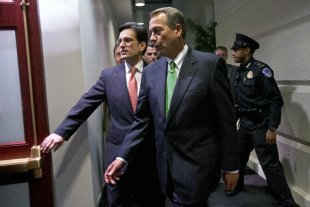
House Majority Leader Eric Cantor, R-Va., left, with Speaker of the House John Boehner, R-Ohio, head into a closed-door …Updated 11:38 pm ET


The House of Representatives late Tuesday easily approved emergency bipartisan legislation sparing all but a sliver of America’s richest from sharp income tax hikes -- while setting up another “fiscal cliff” confrontation in a matter of weeks.


Lawmakers voted 257-167 to send the compromise to President Barack Obama to sign into law. Eighty-five Republicans and 172 Democrats backed the bill, which had sailed through the Senate by a lopsided 89-8 margin shortly after 2 a.m. Opposition comprised 151 Republicans and 16 Democrats.


Republican House Speaker John Boehner voted in favor of the deal, as did House Budget Committee Chairman Paul Ryan, his party's failed vice presidential candidate. But Republican House Majority Leader Eric Cantor and Majority Whip Kevin McCarthy voted against it.


Obama, speaking from the White House briefing room shortly after the vote, praised lawmakers for coming together to avert a tax increase that “could have sent the economy back into a recession.”


“A central premise of my campaign for president was the change the tax code that was too skewed toward the wealthy at the expense of working, middle-class Americans. Tonight, we’ve done that,” the president said.


But he signaled that the legislation was “just one step in the broader effort” of getting the nation’s finances in order while boosting growth and job creation.


“The deficit is still too high,” he said, warning Republicans that he would stick with his demands for a “balanced” approach blending spending cuts with revenue increases, notably from the rich and wealthy corporations.


Republicans vowed a renewed focus on cutting government outlays.


“Now the focus turns to spending,” Boehner said, vowing his party would “hold the president accountable for the balanced approach he promised, meaning significant spending cuts and reforms to the entitlement programs that are driving our country deeper and deeper into debt.”


As debate began, Republican House Ways and Means Chairman Dave Camp heralded “a legacy vote” that amounted to a victory for his party because Democrats agreed to make permanent the tax cuts his party enacted in 2001 and 2003. Camp called the bill a step towards reforming the country’s “nightmare” tax code and described it as the largest tax cut in history.


Representative Sander Levin, the top Democrat on Camp’s committee, claimed victory because the vote shattered “the iron barrier” Republicans maintained for 20 years against raising taxes.


It fell to Democratic Representative Charlie Rangel to admit “this is no profile in courage for me to be voting for this bill” because “we created this monster.”


The polarized House approved the measure, unchanged, after House Republican leaders beat back a day-long insurrection within their ranks fueled by conservative anger at the bill’s lack of spending cuts. A final vote was expected late Tuesday evening.


“They’re crazy, but they’re not that batshit crazy,” Democratic Representative Alcee Hastings told reporters as the Republican plan came into focus.


Hastings’s blunt assessment came after a day in which Republican leaders at times seemed to be as much political arsonists as firefighters in the face of rank-and-file GOP anger at the bill.


The House seemed on track to torch the legislation, a hard-fought bipartisan bill crafted by Vice President Joe Biden and  McConnell that sailed through the Senate by a lopsided 89-8 margin in a vote shortly after 2 a.m.


The compromise bill averts the sharpest tax increase in American history. But it hikes rates on income above $400,000 for individuals and $450,000 for households, while exemptions and deductions the wealthiest Americans use to reduce their tax bill face new limits. The accord also raises the taxes paid on large inheritances from 35% to 40% for estates over $5 million. And it extends by one year unemployment benefits for some two million Americans. It also prevents cuts in payments to doctors who treat Medicare patients and spares tens of millions of Americans who otherwise would have been hit with the Alternative Minimum Tax. And it extends some stimulus-era tax breaks championed by progressives.


The middle class will still see its taxes go up: The final deal did not include an extension of the payroll tax holiday. A report released by the non-partisan Congressional Budget Office Tuesday complicated matters further. It said that the Senate-passed compromise would add nearly $4 trillion to the federal deficit over 10 years.


Despite the overwhelming Senate vote, the accord landed with a thud in the House, where Cantor surprised lawmakers by coming out flatly against the deal during a morning closed-door meeting of House Republicans. Cantor’s announcement fueled conservative anger at the absence of spending cuts in a measure that had originally been considered a likely vehicle for at least some deficit-reduction. The results fed fears that the legislation was doomed.


Republican leadership aides played down the drama by insisting that “the lack of spending cuts in the Senate bill was a universal concern amongst members in today’s meeting.”


After grappling with the insurrection all day, Republican leaders gave their fractious caucus a choice during an emergency 5:15 p.m. meeting: Try to amend it or go for a straight up-or-down vote on the original deal.


Cantor and  Boehner “cautioned members about the risk in such a strategy,” according to a GOP leadership aide.


House Rules Committee Chairman David Dreier, emerging from the gathering, bluntly told reporters “it’s pretty obvious” that amending the legislation and sending it back to the Senate would kill it. Democrats and Republicans in the upper chamber had signaled that lawmakers there would not take up a modified version of what was already a difficult deal.


The resulting pressure on GOP leaders was immense: Absent action to avert the fiscal cliff, Americans would face hefty across-the-board income-tax hikes, while indiscriminate spending cuts risked devastating domestic and defense programs. Skittish financial markets were watching the dysfunction in Washington carefully amid warnings that going off the so-called cliff could plunge the fragile economy into a new recession.


Defeat would have handed Boehner a fresh embarrassment by blocking a measure he explicitly asked the Senate and White House to negotiate without him but vowed to act on if Republicans and Democrats could reach a deal. Public opinion polls had shown that Republicans would have borne the brunt of the blame for fiscal cliff-related economic pain.


Republicans had also fretted about the message if final passage came on the back of a majority of Democratic votes, a tricky thing for Boehner two days before he faces reelection as speaker. (In the hours before the vote, conservative lawmakers played down the risks of a rebellion against the Ohio lawmaker).


Time ran short for another reason: A new Congress will take office at noon on Thursday, forcing efforts to craft a compromise by the current Congress back to the drawing board.


Efforts to modify the first installment of $1.2 trillion in cuts to domestic and defense programs over 10 years -- the other portion of the “fiscal cliff,” known as sequestration -- had proved a sticking point late in the game. Democrats had sought a year-long freeze but ultimately caved to Republican pressure and signed on to just a two-month delay while broader deficit-reduction talks continue.


That would put the next major battle over spending cuts right around the time that the White House and its Republican foes are battling it out over whether to raise the country's debt limit.


Republicans have vowed to push for more spending cuts, equivalent to the amount of new borrowing. Obama has vowed not to negotiate as he did in 2011, when a bruising fight threatened the first-ever default on America's obligations and resulted in the first-ever downgrade of the country's credit rating.


“I will not have another debate with this Congress over whether or not they should pay the bills that they have already racked up through the laws that they passed,” he warned Tuesday. “The consequences for the entire global economy would be catastrophic.”


The president then left for Hawaii to rejoin his family on vacation.


As House Republicans raged at the bill, key House Democrats emerging from a closed-door meeting with Biden expressed support for the compromise and pressed Boehner for a vote on the legislation as written.


“Our Speaker has said when the Senate acts, we will have a vote in the House. That is what he said, that is what we expect, that is what the American people deserve…a straight up-or-down vote,” Democratic House Minority Leader Nancy Pelosi told reporters.


Conservative activist organizations like the anti-tax Club for Growth warned lawmakers to oppose the compromise. The Club charged in a message to Congress that “this bill raises taxes immediately with the promise of cutting spending later.”


President Barack Obama had previously declared that “this agreement is the right thing to do for our country and the House should pass it without delay.”


There were signs that the 2016 presidential race shaped the outcome in the Senate. Republican Senator Marco Rubio, widely thought to have his eye on his party’s nomination, voted no. Republican Senator Rand Paul, who could take up the libertarian mantle of his father Ron Paul, did as well.


In a sign of deep GOP unease over the legislation, Republican leaders Boehner, Cantor, and McCarthy did not speak during the debate. Democratic leaders Nancy Pelosi, Steny Hoyer, and James Clyburn all did.


Biden's visit -- his second to Congressional Democrats in two days -- aimed to soothe concerns about the bill and about the coming battles on deficit reduction.


“This is a simple case of trying to Make sure that the perfect does not become the enemy of the good,” said Democratic Representative Elijah Cummings, one of the chamber’s most steadfast liberals. “Nobody’s going to like everything about it.”


Asked whether House progressives, who had hoped for a lower income threshold, would back the bill, Cummings said he could not predict but stressed: “I am one of the most progressive members, and I will vote for it.”

Read More..

Pope marks end of difficult year, notes God’s good


VATICAN CITY (AP) — Pope Benedict XVI marked the end of a difficult year Monday by saying that despite all the death and injustice in the world, goodness prevails.


Benedict celebrated New Year’s Eve with a vespers service in St. Peter’s Basilica to give thanks for 2012 and look ahead to 2013. He appeared tired during the service and used a cane afterward — an indication that the busy Christmas season may be taking a toll on the 85-year-old Benedict.


In his homily, Benedict said it’s tough to remember that goodness prevails when bad news — death, violence and injustice — “makes more noise than good.” He said taking time to meditate in prolonged reflection and prayer can help “find healing from the inevitable wounds of daily life.”


This past year was full of highs and lows for the pope, including a successful trip to Mexico and Cuba but also the betrayal of his butler, convicted in October of stealing Benedict’s personal papers and leaking them to a journalist.


After the service, Benedict was brought out in a covered car to pray before the Vatican’s main nativity scene in St. Peter’s Square. Walking with a cane in the chilly piazza, Benedict chatted animatedly with the artist who crafted the scene, which recreated an entire village from the poor, southern Italian region of Basilicata which donated this year’s crèche.


The Vatican gladly accepted Basilicata’s donation after the €550,000 price tag the Vatican paid for the 2009 nativity scene was revealed in the documentation leaked by Benedict’s ex-butler Paolo Gabriele.


Gabriele was convicted of aggravated theft by a Vatican tribunal and sentenced to 18 months in prison. He received a pre-Christmas papal pardon and is expected to soon leave his Vatican City apartment for a new home and job elsewhere.


On Tuesday morning, Benedict celebrates a New Year’s Day Mass, which the Catholic Church celebrates as its world day of peace.


Europe News Headlines – Yahoo! News


Title Post: Pope marks end of difficult year, notes God’s good
Rating:
100%

based on 99998 ratings.
5 user reviews.
Author: Fluser SeoLink
Thanks for visiting the blog, If any criticism and suggestions please leave a comment


Read More..

Movers roundup: Facebook, Best Buy


Among the stock activity stories for Monday, Dec. 31, from AP Business News:


— Shares of Facebook Inc. rose after an analyst said advertising spending was picking up on the Internet social network and raised his rating on its stock.


— Shares of Best Buy Co. rose on light volume as the struggling electronics retailer closed out a rocky year.


— Shares of Duff & Phelps Corp. rose on news that the company had agreed to be acquired.


Social Media News Headlines – Yahoo! News


Title Post: Movers roundup: Facebook, Best Buy
Rating:
100%

based on 99998 ratings.
5 user reviews.
Author: Fluser SeoLink
Thanks for visiting the blog, If any criticism and suggestions please leave a comment


Read More..

Hillary Clinton, Hospitalized with a Blood Clot, Faces New Decisions


Yesterday evening Secretary of State Hillary Rodham Clinton was hospitalized for treatment and monitoring of a blood clot. Earlier this month, the 65 year old Secretary collapsed and hit her head while suffering from a stomach virus. At that point, she sustained a concussion. This may have contributed to the new problem, according to State Department notices. The location of her blood clot, in terms of what body part is affected, has not been disclosed.This is the Secretary and former First Lady’s second reported blood clot, or thrombosis. In a previous interview with the New York Daily News, Mrs. Clinton related an episode in 1998 when her foot became swollen and painful. It was a time when she was campaigning and frequently traveling on airplanes. Her doctors diagnosed a blood clot. “That is the most significant health scare I’ve ever had,” she told the Daily News in October, 2007.The most common kind of blood clot, a deep venous thrombosis, or DVT, tends to arise when flow slows down within a vein, typically in a person’s leg. Clots arise when platelets and fibrous proteins clump and stick to a vessel wall. This can be a normal, healthy response to trauma – whether that’s a nick upon shaving or surgical incision. In people disposed to DVT, the small clots don’t dissolve properly or may form in the absence of trauma. If a clot expands and propagates from below the knee, for example, to a more central position in the body, that’s called an embolism. Clots are most dangerous when and if they spread to arteries in the lungs, causing pulmonary embolism, or to vessels in the brain.The CDC estimates that between 300,000 and 600,000 individuals sustain DVTs and pulmonary embolism in the United States each year, and that between 60, 000 and 100,000 of those are events are lethal. Some people inherit a disposition to clotting that can be evaluated by blood tests. Clots are most common in people who’ve been immobilized, such as after surgery, or are bed-bound with illness. Dehydration compounds the risk. Coach class syndrome refers to the proclivity of some to develop clots upon long-distance travel in a cramped position.Other risk factors for DVT include some malignancies. Cancer, depending on its position, can impede blood flow from the lower body, promoting stasis in the leg veins, or otherwise interfere with clot-dissolving proteins. Some women with autoimmune conditions, like lupus and other syndromes, may be disposed to clotting in veins or arteries. Some medications pose a risk, too. Those include estrogen-containing oral contraceptives and hormone replacement therapy. In general, high-estrogen states dispose to pathologic blood clots. In younger women, the disposition to blood clotting can manifest during pregnancy.As far as we know, the cause of Mrs. Clinton’s blood clot is uncertain. She is in the hospital being treated with blood thinners. Usually people who have significant blood clots in a deep vein or artery take an anti-coagulant for a period of months. Until recent years, the standard treatment involved injections of heparin, or similar blood thinners, followed by Coumadin, an oral anticoagulant that requires frequent blood checks. Now, there are more options for therapy, including heparin-like agents that can be injected at home.On November 2 of this year, the FDA approved Xarelto (rivaroxaban) for treatment of deep venous thrombosis. This new drug, a pill, works by inhibiting a clotting factor called Xa. While several oral anticoagulants have received approval for prevention of clots in people undergoing surgery, and for prevention of strokes in people with disposing heart problems, Xarelto is the first in this new class of drugs that might be prescribed for treatment of DVT or pulmonary embolism.Before her recent admission to the hospital, the Secretary of State hadn’t said much about what she’ll do when she exits her official office. Popular views include that she’ll get more rest, exercise, spend time with her family, write a book and, possibly, run for President in 2016. Today, she’s presumably resting and, together with her doctors, sorting out the factors that led to her developing a significant blood clot. Good to know that she, like any other informed patient, has several treatment options to consider.Update: The U.S. State Department issued an update on Mrs. Clinton’s condition, clarifying that the Secretary of State has a blood clot in a vein near the inside of the skull, on the right side. According to their statement, she has not suffered a stroke or neurological damage. Photo: State Department’s Tumblr


Follow Scientific American on Twitter @SciAm and @SciamBlogs.Visit ScientificAmerican.com for the latest in science, health and technology news.
© 2012 ScientificAmerican.com. All rights reserved.
Medications/Drugs News Headlines – Yahoo! News


Title Post: Hillary Clinton, Hospitalized with a Blood Clot, Faces New Decisions
Rating:
100%

based on 99998 ratings.
5 user reviews.
Author: Fluser SeoLink
Thanks for visiting the blog, If any criticism and suggestions please leave a comment


Read More..

Tentative ‘fiscal cliff’ deal reached in Senate


President Barack Obama discusses the negotiations with Capitol Hill on the looming fiscal cliff in front of middle …Racing to beat a midnight deadline, Vice President Joe Biden traveled to Capitol Hill Monday night to sell wary Democratic senators on an 11th-hour deal to avert income tax hikes on all but a sliver of the richest Americans.


Grinning broadly, Biden ignored reporters questions on whether he and Republican Senate Minority Leader Mitch McConnell had finally forged a compromise to avoid the "fiscal cliff" that threatened the still-fragile economy with a new recession. "Happy new year," he replied.


He was only slightly chattier on his way out about an hour and 45 minutes later. Asked what his selling point had been, Biden reportedly replied: "Me."


Earlier, a Democratic Senate aide told Yahoo News that "the White House and Republicans have a deal," while a source familiar with the negotiations said President Barack Obama had discussed the compromise with Democratic Senate Majority Leader Harry Reid and Democratic House Minority Leader Nancy Pelosi and "they both signed off."


The apparent agreement set up a Senate vote late Monday or possibly in the wee hours of Tuesday. The House of Representatives was due back at noon on Tuesday to take it up.


In a joint statement, the House’s Republican leaders including Speaker John Boehner hinted that they might amend anything that clears the Senate – a step that could kill the deal.


“Decisions about whether the House will seek to accept or promptly amend the measure will not be made until House members -- and the American people -- have been able to review the legislation,” they said.


Under the compromise arrangement, taxes would rise on income above $400,000 for individuals and $450,000 for households, while exemptions and deductions the wealthiest Americans use to reduce their tax bill would face new limits. The accord would also raise the taxes paid on large inheritances from 35% to 40% for estates over $5 million. And it would extend by one year unemployment benefits for some two million Americans.


Biden, a 36-year Senate veteran, worked out the agreement with McConnell after talks between Obama and Republican House Speaker John Boehner collapsed.


But with time running short, the country appeared on track to go over the cliff at midnight -- though quick congressional action, and the fact that financial markets were to be closed on New Year's Day, were expected to limit the damage.


“Today, it appears that an agreement to prevent this New Year's tax hike is within sight, but it's not done,” Obama said in hastily announced midday remarks at the White House. “There are still issues left to resolve, but we're hopeful that Congress can get it done – but it’s not done.”


"One thing we can count on with respect to this Congress is that if there is even one second left before you have to do what you’re supposed to do, they will use that last second," he said.


Obama’s remarks – by turns scolding, triumphant, and mocking of Congress – came after talks between McConnell and Biden appeared to seal the breakthrough deal.


The middle class will still see its taxes go up: The final deal did not include an extension of the payroll tax holiday. And the overall package will deepen the deficit by hundreds of billions of dollars by extending the overwhelming majority of the Bush tax cuts. Many Democrats had opposed those measures in 2001 and 2003. Obama agreed to extend them in 2010.


Efforts to modify the first installment of $1.2 trillion in cuts to domestic and defense programs over 10 years -- the other portion of the “fiscal cliff,” known as sequestration -- had proved a sticking point late in the game. Democrats had sought a year-long freeze but appeared to have caved to Republican pressure and signed on to just a two-month delay. That would put the next battle over those cuts right around the time that the White House and its Republican foes are battling it out over whether to raise the country's debt limit. Republicans have vowed to push for more spending cuts, equivalent to the amount of new borrowing. Obama has vowed not to negotiate as he did in 2011, when a bruising fight threatened the first-ever default on America's obligations and resulted in the first-ever downgrade of the country's credit rating.


Experts had warned that the fiscal cliff's tax increases and spending cuts, taken together, could plunge the still-fragile economy into a new recession.


“I can report that we’ve reached an agreement on all of the tax issues,” McConnell said on the Senate floor. “We are very, very close to an agreement.”


The Kentucky Republican later briefed Republicans on the details of the deal. Lawmakers emerged from that closed-door session offered hopeful appraisals that, after clearing a few last-minute hurdles, they could vote on New Year’s Eve or with 2013 just hours old.


“Tonight, I hope,” Republican Senator Bob Corker of Tennessee told reporters. “It may be at 1, 2, 3, 4 in the morning. Oh, I guess that’s technically tomorrow.”


Republican Senators said negotiators were still working on a way to forestall two months of the “sequester” spending cuts, about $20 billion worth. And some expressed disquiet that the tentative compromise ran high on tax increases and low on spending cuts -- while warning that failure to act, triggering some $600 billion in income tax increases on all Americans who pay it and draconian spending cuts, was the worse option.


McConnell earlier had called for a vote on the tax component of the deal.


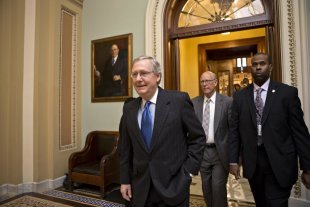
“Let me be clear: We’ll continue to work on finding smarter ways to cut spending, but let’s not let that hold up protecting Americans from the tax hike,” McConnell urged. “Let’s pass the tax relief portion now. Let’s take what’s been agreed to and get moving.”Senate Minority Leader Mitch McConnell, R-Ky., followed by Sen. Pat Roberts, R-Kan., second from right, leaves …


The final compromise needed to clear the Democratic-led Senate and Republican-held House. Aides in both chambers doubted that could happen by midnight – but emphasized that there was no need to move the family into the Doomsday bunker in the back yard. Yet.


Unlike a college student who writes an end-of-semester paper overnight before a morning deadline, then drops the assignment off hours after it was due, Congress can write its own rules to minimize the damage – and Americans whose taxes are staying the same won’t see a change in their bottom line.


“It’s basically a matter of saying it’s effective January 1,” one senior Republican aide shrugged.


But passage was not a sure thing: Both the AFL-CIO labor union and the conservative Heritage Action organization argued against the package.


The breakthrough came after McConnell announced Sunday that he had started to negotiate with Biden in a bid to "jump-start" stalled talks to avoid the fiscal cliff.


Under their tentative deal, the top tax rate on household income above $450,000 would rise from 35 percent to 39.6 percent -- where it was under Bill Clinton, before the reductions enacted under George W. Bush in 2001 and 2003.


Some congressional liberals had expressed objections to extending tax cuts above the $250,000 income threshold Obama cited throughout the 2012 campaign. Democrats were huddling in private as well to work out whether they could support the arrangement.


Possibly with balking progressives in mind, Obama trumpeted victories dear to the left of his party. "The potential agreement that’s being talked about would not only make sure the taxes don’t go up on middle-class families, it also would extend tax credits for families with children. It would extend our tuition tax credit that’s helped millions of families pay for college. It would extend tax credits for clean energy companies that are creating jobs and reducing our dependence on foreign oil. It would extend unemployment insurance to 2 million Americans who are out there still actively looking for a job."


Obama said he had hoped for "a larger agreement, a bigger deal, a grand bargain," to stem the tide of red ink swamping the country’s finances – but shelved that goal.


"With this Congress, that was obviously a little too much to hope for at this time," he said. "It may be we can do it in stages. We’re going to solve this problem instead in several steps."


The president also looked ahead to his next budgetary battle with Republicans, warning that “any future deficit agreement” will have to couple spending cuts with tax increases. He expressed a willingness to reduce spending on popular programs like Medicare, but said entitlement reform would have to go hand in hand with new tax revenues.


“If Republicans think that I will finish the job of deficit reduction through spending cuts alone … then they’ve another thing coming,” Obama said defiantly. “That’s not how it’s going to work.”


“If we’re serious about deficit reduction and debt reduction, then it’s going to have to be a matter of shared sacrifice. At least as long as I’m president. And I’m going to be president for the next four years, I hope,” he said.


Read More..

Kobe Bryant Finally Joins Twitter — Kind Of


Long among the sports world’s biggest Twitter holdouts, Kobe Bryant has finally joined the social network. But he hasn’t opened an account, and won’t be around for long.


Social savvy fans are being blessed with his presence thanks to Nike Basketball, which has turned over its account to Bryant since Tuesday.


[More from Mashable: Avery Johnson’s Teenage Son Unloads on Twitter After NBA Firing]


Nike Basketball, which sponsors Bryant and produces his official sneaker, announced the Kobe takeover in a Christmas Day tweet. The account’s name is now “Kobe Bryant” although its handle remains @nikebasketball. Kobe has spent the past few days tweeting about a variety of subjects using a series of hashtags that play off the theme #counton-fill-in-the-blank.


He’s tweeted about the Lakers progress as a team:


[More from Mashable: FanDuel Is Fantasy Sports With a Twist]


He’s tweeted behind-the-scenes snippets of training and treatment:


And he’s tweeted a totally normal, typical, everyday holiday family portrait:


Bryant actually joined Twitter for realsies back in 2011, but then deleted the account after racking up more than 35,000 followers in a just a few hours. He’s one of the NBA’s few stars without a Twitter presence. Nearly 90% of the league’s players are on the social network, according to Twitter.


But Bryant did become much more active on Facebook this summer, especially while traveling with the United States’ Olympic basketball team. He has nearly 15 million fans there, and reportedly writes his status updates and messages himself, with editing and actual posting done by support staff. In November he asked Facebook fans whether to join Instagram or Twitter next, and on Monday hinted in a status update that he may soon open an Instagram account.


What athletes would you most like to see get more active on social media? Let us know in the comments.


BONUS: 30 Must-Follow Twitter Accounts This NBA SEASON


1. @NBA


The NBA is arguably the world’s most engaging sports league on social media. Follow its official Twitter account for news, highlights and promotions.


Click here to view this gallery.


Thumbnail image courtesy Flickr, Keith Allison


This story originally published on Mashable here.


Social Media News Headlines – Yahoo! News


Title Post: Kobe Bryant Finally Joins Twitter — Kind Of
Rating:
100%

based on 99998 ratings.
5 user reviews.
Author: Fluser SeoLink
Thanks for visiting the blog, If any criticism and suggestions please leave a comment


Read More..

UK “X Factor” winner regains top chart spot


LONDON (Reuters) – James Arthur, winner of this year’s British version of the “X Factor” TV talent show, saw his debut single climb back to number one in the British pop charts on Sunday.


Arthur’s “Impossible” shot straight to the top earlier this month but was overtaken last week by a tribute song to the victims of the 1989 Hillsborough football stadium disaster, “He Ain’t Heavy, He’s My Brother”, a version of the ballad that was a worldwide hit for The Hollies.


That song has now slipped to fifth position, according to the Official Charts Company listings.


“Scream and Shout” by will.i.am, featuring Britney Spears, stayed at two while Psy’s monster video hit “Gangnam Style” was up three places to third.


In the album charts, British singer Emeli Sande stayed top with “Our Version Of Events”, with Olly Murs‘ “Right Place, Right Time” unchanged at two.


Rihanna was up three places to third with “Unapologetic”.


(Reporting by Stephen Addison; Editing by Alison Williams)


Music News Headlines – Yahoo! News


Title Post: UK “X Factor” winner regains top chart spot
Rating:
100%

based on 99998 ratings.
5 user reviews.
Author: Fluser SeoLink
Thanks for visiting the blog, If any criticism and suggestions please leave a comment


Read More..

New Year’s Resolutions For Better Health


New Year’s resolutions are typically so singular, self-focused and private. How about making a resolution or two this year that has benefits beyond yourself? Here are some suggestions with lots of links to get you started.


You can help stop the spread of disease. Resolve to get up-to-date on your vaccines. While children have a full slate of vaccines, many adults don’t realize they have regular immunization obligations, too. Getting flu, pertussis, human papillomavirus and other vaccines can protect you and help stop the spread of diseases that harm others. Here’s a great guide to adult immunizations from the federal government. If the cost of vaccines is an issue, check into free or low-cost immunizations through your county’s public health department. Here’s a guide to finding your local office. Volunteer with an organization that needs your help. A group called Catchafire matches professionals who wish to volunteer their skills to organizations that need the help — including many important health organizations. The idea is to give great organizations access to top talent while respecting the professionals’ schedules and making their volunteer work meaningful. Here’s the link. Influence a healthier food climate. Americans spend about half of their food budgets eating out. So we had better demand thorough nutritional information about what we’re getting. Under healthcare reform, many restaurant chains will soon carry nutritional information. But the law has loopholes. If you don’t see the information you’re looking for on salt, fat, calories or other nutrients, ask the restaurant’s manager where you can find it. Nutritional information should be easy to access. Until it is, speak up and ask for it. Do your part to keep down healthcare costs. The Affordable Care Act will bring many consumers into the insurance healthcare system for the first time. But that doesn’t mean we can ignore the cost of care. Rising healthcare costs remain a huge issue that could drag down the economy and bedevil some reform efforts. You can help by being a wise healthcare consumer. Read your insurance policy and know what it does and doesn’t cover. Take advantage of free preventive care services and screening tests under the ACA. Shop around for prescriptions to find the cheapest prices. Ask your doctor for generic equivalents. Finally, use your health savings account if your employer offers one. These accounts provide incentives for using your money wisely, shopping around to find the best healthcare prices and weighing the costs and benefits of certain drugs, tests or procedures.  Here’s a guide to understanding how HSAs work. Be responsible about the prescription drugs you store at home. You can reduce your own risk of addiction and lower the risk for others, too, if you are careful about medications kept in your home. This year marked a turning point in the nation’s epidemic of prescription-drug abuse and addiction.  Admissions to addiction treatment centers for use of narcotic painkillers rose 569 percent in the past decade, according to the federal government. More people now die from drug overdoses than from traffic accidents. More than six million Americans abuse prescription drugs, and more than 70 percent of addicts get their drugs through family or friends or by raiding a home medicine cabinet. Dispose of unused medications. The Drug Enforcement Agency operates a National Prescription Drug Take-Back Day a few times a year (the next one is in April), that makes it easy to dispose of dangerous substance.  Go through your home today and collect unused medications. You can take them to a pharmacy for disposal or even flush them down the toilet. Some drugs carry disposal instructions on the label. Here’s information on how to dispose of prescription medications. Be a safe driver. One of the biggest safety issues on the nation’s roads these days is driver distraction. A large share of the distractions come from talking on a hand-held cell phone or text messaging while driving. You’re 23 times more likely to crash if you text while driving. Most states now prohibit texting while driving, but there are still many people who do it while knowing it’s unsafe. Break yourself of this terrible habit. The federal government has a website that provides people with information and tools to discourage distracted driving. Included in this package is a simple pledge sheet you can print out, sign and post on your refrigerator door or bathroom to help you make the commitment. There are a couple of other things you can do, too. Speak out if the driver you’re riding with is distracted. Encourage family and friends to drive phone-free. Run a race for the greater good. Who doesn’t love a good 5K walk or run? You benefit from the exercise and, if you choose a charity race, others reap rewards, too. There are thousands of charity races each year. Pick one and invite your friends to participate with you. Here’s a website to help you find a race.  Apply for a grant. There’s money out there for doing good. Saucony’s Run for Good Foundation aims at preventing child obesity by promoting running as part of a healthy lifestyle for kids. The foundation issues grant money to organizations that want to organize a kids’ running group. You can find information on how to apply at the foundation website. Sign a petition. Concerned about flame retardants in consumer products? Gun safety? Funding for research to fight a particular disease? There’s probably a petition for that. It’s an easy way to make your voice heard. Both change.org and thepetitionsite.com are good places to look to find a petition close to your heart.


Question: What resolutions can you make to help others? Tell us what you think in the comments.


Shari Roan is an award-winning health writer based in Southern California. She is the author of three books on health and science subjects.


Medications/Drugs News Headlines – Yahoo! News


Title Post: New Year’s Resolutions For Better Health
Rating:
100%

based on 99998 ratings.
5 user reviews.
Author: Fluser SeoLink
Thanks for visiting the blog, If any criticism and suggestions please leave a comment


Read More..

Clinton admitted to hospital with blood clot


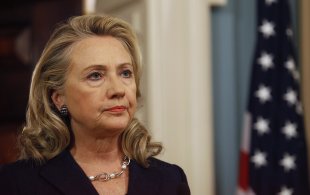
(REUTERS/Gary Cameron) U.S. Secretary of State Hillary Clinton delivers remarks at the State Department in Washington …Secretary of State Hillary Rodham Clinton has been admitted to a New York hospital for treatment of a blood clot, her spokesman said Sunday.


State Department Spokesman Philippe Reines said Clinton had entered the hospital following a medical examination for a concussion she sustained earlier this month.
"In the course of a follow-up exam today, Secretary Clinton's doctors discovered a blood clot had formed, stemming from the concussion she sustained several weeks ago," Reines said in a statement.  "She is being treated with anti-coagulants and is at NewYork-Presbyterian Hospital so that they can monitor the medication over the next 48 hours."


Reines added, "Her doctors will continue to assess her condition, including other issues associated with her concussion. They will determine if any further action is required."


Clinton was scheduled to return to work this week after treatment for the concussion. She is set to step down from her post shortly after President Barack Obama's inauguration on January 21. Last week, Obama announced he had chosen Massachusetts Sen. John Kerry to replace Clinton as the nation's top diplomat.


Read More..

Arab League chief says Palestinians to petition UN


RAMALLAH, West Bank (AP) — Arab League chief Nabil Elaraby says two decades of talks with Israel have been “a waste of time” and that Palestinians will soon take a new statehood bid to the U.N.


“We will return to the U.N. Security Council,” he said in Ramallah Saturday after meeting Palestinian officials. “Palestine will be cooperating with Arab and EU countries to change the equation (in the peace process) that prevailed over the past 20 years, which was a waste of time.”


The U.N. last month endorsed a de facto Palestinian state in the West Bank, east Jerusalem and Gaza, areas Israel won in a 1967 war.


Talks collapsed in 2008 after Palestinians demanded Israel stop building in areas they want for a future state. Israel insists settlements and other issues should be negotiated.


Middle East News Headlines – Yahoo! News


Title Post: Arab League chief says Palestinians to petition UN
Rating:
100%

based on 99998 ratings.
5 user reviews.
Author: Fluser SeoLink
Thanks for visiting the blog, If any criticism and suggestions please leave a comment


Read More..

Praying Hitler in ex-Warsaw ghetto sparks emotion


WARSAW, Poland (AP) — A statue of Adolf Hitler praying on his knees is on display in the former Warsaw Ghetto, the place where so many Jews were killed or sent to their deaths by Hitler’s regime, and it is provoking mixed reactions.


The work, “HIM” by Italian artist Maurizio Cattelan, has drawn many visitors since it was installed last month. It is visible only from a distance, and the artist doesn’t make explicit what Hitler is praying for, but the broader point, organizers say, is to make people reflect on the nature of evil.


In any case, some are angered by the statue’s presence in such a sensitive site.


One Jewish advocacy group, the Simon Wiesenthal Center, this week called the statue’s placement “a senseless provocation which insults the memory of the Nazis’ Jewish victims.”


“As far as the Jews were concerned, Hitler’s only ‘prayer’ was that they be wiped off the face of the earth,” the group’s Israel director, Efraim Zuroff, said in a statement.


However, many others are praising the artwork, saying it has a strong emotional impact. And organizers defend putting it on display in the former ghetto.


Fabio Cavallucci, director of the Center for Contemporary Art, which oversaw the installation, said, “There is no intention from the side of the artist or the center to insult Jewish memory.”


“It’s an artwork that tries to speak about the situation of hidden evil everywhere,” he said.


The Warsaw ghetto was an area of the city which the Nazis sealed off after they invaded Poland. They forced Jews to live in cramped, inhuman conditions there as they awaited deportation to death camps. Many died from hunger or disease or were shot by the Germans before they could be transported to the camps.


The Hitler installation is just one object in a retrospective of Cattelan’s work titled “Amen,” a show that explores life, death, good and evil. The other works are on display at the center itself, which is housed in the Ujazdowski Castle.


The Hitler representation is visible from a hole in a wooden gate across town on Prozna Street. Viewers only see the back of the small figure praying in a courtyard. Because of its small size, it appears to be a harmless schoolboy.


“Every criminal was once a tender, innocent and defenseless child,” the center said in a commentary on the work.


Poland’s chief rabbi, Michael Schudrich, said he was consulted on the installation’s placement ahead of time and did not oppose it because he saw value in the artist’s attempt to try to raise moral questions by provoking viewers.


He said he was reassured by curators who told him there was no intention of rehabilitating Hitler but rather of showing that evil can present itself in the guise of a “sweet praying child.”


“I felt there could be educational value to it,” said Schudrich, who also wrote an introduction to the exhibition’s catalogue in which he says art can “force us to face the evil of the world.”


On Friday, a stream of people walked by to view the work, and many praised it.


“It had a big emotional impact on me. It’s provocative, but it’s not offensive,” said Zofia Jablonska, a 30-year-old lawyer. “Having him pray in the place where he would kill people — this was the best place to put it.”


Cattelan caused controversy in Warsaw in 2000 when another gallery showed his work “La Nona Ora” — or “The Ninth Hour” — which depicts the late Pope John Paul II being crushed by a meteorite. That offended many in Poland, which is both deeply Catholic and was John Paul’s homeland.


Entertainment News Headlines – Yahoo! News


Title Post: Praying Hitler in ex-Warsaw ghetto sparks emotion
Rating:
100%

based on 99998 ratings.
5 user reviews.
Author: Fluser SeoLink
Thanks for visiting the blog, If any criticism and suggestions please leave a comment


Read More..

Analysis: After “fiscal cliff” dive, more battles, new cliffs


WASHINGTON (Reuters) – Whether or not the “fiscal cliff” impasse is broken before the New Year’s Eve deadline, there will be no post-cliff peace in Washington.


With the political climate toxic in Congress as the cliff’s steep tax hikes and spending cuts approach, other partisan fights loom, all over the issue that has paralyzed the capital for the past two years: federal spending.


The first will come in late February when the Treasury Department runs out of borrowing authority and has to come to Congress to get the debt ceiling raised.


The next is likely in late March, when a temporary bill to fund the government runs out, confronting Congress with a deadline to act or face a government shutdown. The third will possibly be whenever the temporary bill replacing the temporary bill expires.


While Congress is supposed to pass annual spending bills before the start of each fiscal year, it has failed to complete that process since 1996, resorting to stopgap funding ever since.


Influential anti-tax activist Grover Norquist predicted in an interview with Reuters that conservatives would wage repeated battles with President Barack Obama to demand budget savings every time the government needs a temporary funding bill or more borrowing capacity.


The so-called “continuing resolutions” to which a divided Congress has increasingly resorted to keep the government operating, provide a “very powerful tool” to pry out spending cuts, said Norquist, president of Americans for Tax Reform.


Republican Senator Bob Corker of Tennessee said he will not be satisfied until there are substantial cuts to federal retirement and healthcare benefits known as entitlements, producing savings in the $ 4.5 trillion to $ 5 trillion range.


“Unfortunately for America,” said Corker, “the next line in the sand will be the debt ceiling.”


Most observers see the $ 16.4 trillion debt limit as the true fiscal cliff in the new year because if not increased, it would eventually lead to a default on U.S. Treasury debt, an event that could prove cataclysmic for financial markets.


The Treasury Department said on Wednesday it would start taking extraordinary measures by December 31 to extend its borrowing capacity for about two more months.


‘POISONOUS CLIMATE’


It was a deadlock over raising the debt ceiling in August 2011 that prompted a deficit reduction deal that led to a key fiscal cliff component, the $ 109 billion in automatic spending cuts on military and domestic programs.


If the fiscal cliff’s spending cuts or tax increases are left even partly unresolved on December 31, the political combat over them will carry over into the new Congress, possibly simultaneously with the debt ceiling debate.


“We would be pessimistic of a quick fix” if the deadline is missed, Sean West, head U.S. analyst at Eurasia Group, a political risk consultancy, said in a note to clients. “The political climate will be poisoned. The new Congress will need time to settle in.”


“We are concluding one of the most unsuccessful Congresses in history,” Democratic Representative John Dingell of Michigan declared in a statement on Saturday, “noteworthy not only for its failure to accomplish anything of importance, but also for the poisonous climate of the institution.”


Dingell, 86, is the longest serving member of the House, elected first in 1955.


Historically, bitter struggles in Congress like that over the fiscal cliff lead to further resentment and strife in a cycle of cumulative grudges that now spans nearly 30 years.


Many analysts and lobbyists in Washington believe the strife could get even worse because the new Congress convening on January 3 will include fewer members from moderate or swing districts and more from districts tilted heavily to the left or the right.


Republicans in particular are likely to face their most serious re-election challenges in 2014 not from Democrats but from conservative Republicans challenging them in primary elections.


“Ironically,” said a post-election analysis published by the law firm Patton Boggs, “the voters have elected a 113th Congress that may be even more partisan than the 112th.”


(Reporting by David Lawder and Fred Barbash; Editing by Eric Beech)


Health News Headlines – Yahoo! News


Title Post: Analysis: After “fiscal cliff” dive, more battles, new cliffs
Rating:
100%

based on 99998 ratings.
5 user reviews.
Author: Fluser SeoLink
Thanks for visiting the blog, If any criticism and suggestions please leave a comment


Read More..

Senate leaders work to avoid New Year's fiscal cliff


WASHINGTON |
Sat Dec 29, 2012 7:22pm EST


WASHINGTON (Reuters) - Congressional negotiators burrowed into their offices on Saturday to see if they could stop the U.S. economy from falling off of a "fiscal cliff" in just three days when the biggest tax increases ever to hit Americans in one shot are scheduled to begin.


Aides to Senate Majority Leader Harry Reid, a Democrat, and Senate Republican leader Mitch McConnell worked through the day on a possible compromise that would set aside $600 billion in tax increases and across-the-board government spending cuts that are set to kick in next week.

A variety of lower taxes are scheduled to expire at the end of Monday, the last day of the year. If allowed to rise, the approximately $500 billion value of the revenue increases would represent a historic hike when taken together.

The combined punch of the tax increases and spending cuts could push the U.S. economy back into recession.

"We're now at the point where, in just a couple days, the law says that every American's tax rates are going up. Every American's paycheck will get a lot smaller. And that would be the wrong thing to do for our economy," President Barack Obama said in his weekly radio and Internet address, which was broadcast on Saturday.

McConnell left the U.S. Capitol after spending seven hours in his office. "We've been trading paper all day and talks continue into the evening," he told reporters on his way out.

A source with knowledge of the talks, speaking on condition of anonymity, said: "We are still very far apart with almost no time left on the clock."

TEMPORARY PATCHES

One congressional aide close to the talks said that most of what was being discussed late on Saturday would provide temporary patches to the "fiscal cliff" dilemma. The negotiations, the aide said, likely could extend into Sunday.

"They continue to go round and round," the aide said of the negotiations, with ideas constantly in flux.

The aide, who asked not to be identified, said negotiators were discussing the possibility of putting off for a few months the $109 billion in automatic spending cuts due to start on Wednesday. Those cuts would be divided equally between military and non-military programs. It is feared that they could cause severe disruptions inside federal agencies if allowed to occur.

Earlier this week, talk of a temporary delay in the spending cuts was met with derision by some congressional aides.

The extension of the low income tax rates first put in place under Republican former President George W. Bush would also be on a temporary basis, probably one year, the aide said.

No deal had been reached on the most difficult question: Democrats' demand that upper-income earners - families making more than $250,000 a year - see their tax rates go up.

Republicans had been opposed to any rate increase, but lately have signaled a willingness to go along with a higher threshold - and a $400,000 figure has been floating around for days.

Under proposals being discussed, top earners could see their income tax rate rise to 39.6 percent, from the current 35 percent, in order to help tame budget deficits.

The aide added that Republicans still had not agreed to Obama's call for extending long-term unemployment benefits, but that they were demanding some spending cuts to be included in a stop-gap deal.

Disagreements over what to do about low estate taxes that are expiring also had not been worked out, the aide said.

Unless Congress acts, the tax is set to jump on Tuesday - the first day of 2013 - to 55 percent with the first $1 million exempted for individuals. Currently, there is a 35 percent tax and a $5 million exemption.

A Senate Republican leadership aide said that it might not be known until sometime on Sunday whether these talks bear fruit. That is when the leaders are expected to brief their rank-and-file members.

The Senate is scheduled to hold a rare Sunday session beginning at 1 p.m. EST (1800 GMT), but it was not clear whether the chamber would have "fiscal cliff" legislation to act upon.

One Democratic aide was pessimistic that McConnell would come up with a counteroffer that Reid would find acceptable. Such a counteroffer would have to be calibrated in a way that also could attract votes from conservative House of Representatives Republicans, many of whom have balked at tax rate increases on anyone.

'HARD TO SEE'

A senior House Republican aide on Saturday voiced pessimism about prospects for a deal.

"It's hard to see Reid agreeing to anything that can get the votes of the majority of the (Republican) majority in the House, thereby allowing a bipartisan accomplishment," the aide said. A "majority of the majority" refers to the 241 Republicans who are in the 435-member House.

The Republican aide placed the blame squarely on Democrats, as many Republican members have done publicly, saying that going off the "fiscal cliff" is a "policy upside" for them. "Higher taxes, devastating defense cuts. The polls tell them they can win the PR (publican relations) war in January. From their perspective, why stop the cliff dive?"

Democrats, in turn, have publicly accused House Speaker John Boehner, the top Republican in Congress, of preferring to put off any tough "fiscal cliff" votes until after a January 3 House election in which he is expected to win another two-year term as speaker.

If McConnell and Reid can manage to reach a deal on inheritance taxes and raising income tax rates on the wealthiest Americans, they likely would throw into the compromise some other "fiscal cliff" solutions.

Those could include extending an array of other expiring tax breaks such as one that encourages companies to conduct research and development. Also, Congress wants to prevent a steep pay-cut in January for doctors who treat elderly patients under the Medicare health insurance program.

Lawmakers also want to prevent middle-class taxpayers from inadvertently creeping into a higher tax bracket, known as the alternative minimum tax, intended for the wealthiest.

If the Reid-McConnell effort fails, Obama has asked the Senate to hold a vote on Monday on a "basic package" that would stop taxes from going up on the middle class and would extend long-term unemployment benefits that are about to expire. If it passes the Senate, its fate would be in the hands of the Republican-controlled House.

(Additional reporting by Thomas Ferraro and Jeff Mason; Editing by Will Dunham)

Read More..